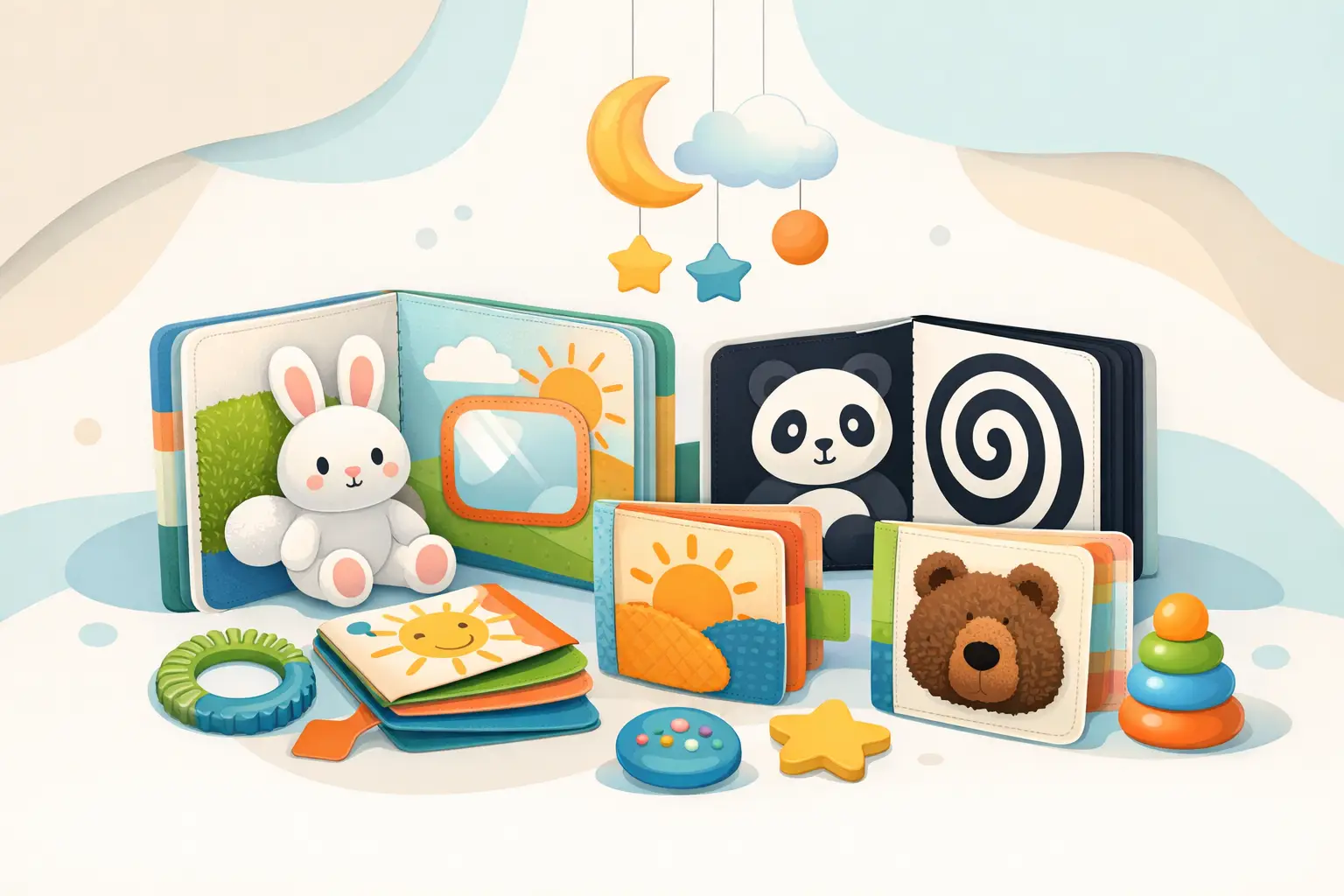
A baby who repeatedly rubs a crinkly page, pats a fluffy animal or splashes a waterproof book in the bath is not ‘just playing’. They are learning how books feel, sound and work. The best sensory books for babies turn those tiny moments of curiosity into a warm, repeatable English-reading routine – without expecting little ones to sit still for a whole story.
For Hong Kong families building an English book collection from the start, sensory books are a practical first choice. They invite babies into reading before they can speak, point reliably or turn thin paper pages. The aim is not to finish every page. It is to make books familiar, enjoyable and part of everyday family life.
What makes a sensory book worth buying?
A good sensory book gives a baby something safe and age-appropriate to do while an adult supplies the words. That may be touching different textures, lifting a sturdy flap, hearing a gentle rattle or spotting a bright, simple picture. The best choices pair the activity with clear English words: soft, rough, red, puppy, splash, up and down.
It also needs to suit the stage your child is actually in. A newborn may enjoy high-contrast faces and soft fabric, while an older baby may want flaps, mirrors and familiar objects to point at. More features do not automatically make a better book. A book with too many sounds, busy pictures or delicate parts can distract from shared reading, especially for younger babies.
When choosing, check the recommended age, page construction and cleanability. Babies explore with their hands and mouths, so board pages should be sturdy, cloth books should be washable where stated, and bath books should be designed for water play. Inspect books regularly and supervise use, particularly where there are textured inserts, tabs or sound components.
12 best sensory books for babies by type
Rather than looking for one perfect title, it is usually smarter to build a small mix. Each format offers a different kind of interaction, so your baby can enjoy books at home, in the buggy, before bed and during bath time.
1. High-contrast black-and-white books
For newborns and young babies, bold black-and-white patterns, faces and simple shapes are often easier to notice than crowded scenes. Choose a short board book or soft concertina book with strong contrast and only a few images per page. Name what your baby is looking at, even if they cannot yet respond: “A big star”, “a striped fish”, “hello, baby”.
2. Cloth books with crinkly pages
A cloth book is a sensible first book for little hands. It is light, soft and forgiving when dropped, grabbed or chewed. Crinkly pages reward movement with sound, helping babies connect their action with a result.
Look for designs with simple pictures of animals, vehicles or bedtime objects. These familiar themes make it easy to repeat useful English vocabulary without making reading feel like a lesson.
3. Touch-and-feel board books
Touch-and-feel books remain a favourite because they give adults an easy reading prompt: “Can you feel the soft kitten?” or “Where is the bumpy shell?” Textures should be clearly different from one another, not merely decorative.
For babies at the mouthing stage, choose chunky board pages and large texture areas. Small, fussy patches may be less satisfying and can wear out quickly with enthusiastic use.
4. Baby-safe mirror books
Babies are fascinated by faces, including their own. A book with a securely fitted baby-safe mirror can encourage tummy-time engagement and joyful interaction. Use the mirror page to practise simple language such as “baby”, “eyes”, “nose”, “smile” and your child’s name.
Mirror books work particularly well when the illustrations also show emotions. You can copy a happy, sleepy or surprised face together, turning a quick read into a little conversation.
5. Lift-the-flap board books
Once babies can sit and use their hands with more purpose, flaps add a pleasing element of surprise. A familiar question and answer pattern – “Where is the puppy?” followed by a flap to lift – helps them understand that books hold discoveries.
Choose books with large, reinforced flaps for younger babies. Paper flaps can be better saved for toddlers who are beginning to handle books more gently. It depends on your child’s stage: some careful babies manage them early, while others are happier with touch books for longer.
6. Bath books
Bath books make good use of a routine when babies are often calm, contained and ready to play. Waterproof pages with bright pictures can turn bath time into a relaxed English chat about ducks, fish, bubbles and colours.
Keep the language light. Point, name and repeat rather than trying to read every printed word. After use, shake off water and allow the book to dry properly according to its care instructions.
7. Squeaky and sound books
A gentle squeak, rattle or pressable sound button can be wonderfully motivating. Animal noises are especially useful because babies often enjoy copying them before they can form many words. “Moo”, “woof” and “quack” make reading lively and naturally repetitive.
The trade-off is volume and durability. Very loud electronic books may become tiring in a flat, on public transport or at bedtime. Start with one sound book rather than several, and use it together so the sounds support the story instead of taking over.
8. Peekaboo books
Peekaboo is already a game babies understand. Books based on hiding and finding can extend that game with predictable wording and familiar faces. Repeated phrases such as “Where are you?” and “There you are!” encourage anticipation, eye contact and early turn-taking.
These books are particularly useful for carers who want a quick, cheerful read during nappy changes or while waiting for a feed. A two-minute book read often counts for more than a longer book that everyone abandons halfway through.
9. Finger-trail and shaped books
Books with grooves to trace, cut-out shapes or indented paths give babies a reason to follow the page with their fingers. This supports hand control and keeps attention on the book, while parents can add words such as “round”, “curly”, “up” and “down”.
For the youngest babies, keep expectations low. You can guide their hand or trace the line yourself. As they grow, they may begin to explore the path independently.
10. First-words sensory books
A sensory book does not need a plot to be valuable. First-words books featuring food, animals, clothes, toys and everyday routines can become some of the most frequently used books in the house. Select books with uncluttered images and one clear word or phrase at a time.
For bilingual families, you can say the English word first, then explain naturally in Cantonese if helpful. The goal is connection and understanding, not a test of what your baby can repeat.
11. Bedtime sensory books
Not every sensory book needs to make noise. A calm cloth or board book with soft colours, gentle textures and a simple bedtime theme can help create a predictable wind-down cue. Reading the same short book each evening allows babies to recognise the rhythm and begin to anticipate sleep.
Avoid flashing lights and energetic sound effects close to bedtime if your child becomes more alert with stimulation. The best bedtime book is often the quiet one they ask for again and again.
12. Sensory book sets
A small set can offer better value than buying several similar books one at a time, especially when you are establishing a home library. The most useful sets mix formats or themes: perhaps a cloth book for travel, a touch-and-feel board book for daytime and a bath book for evening play.
Do not buy a large bundle simply because every book is discounted. Consider where and when each book will be used. A carefully chosen set of three or four books that your baby returns to is better value than a shelf full of unopened titles.
How to match sensory books to your baby’s age
From birth to around six months, prioritise soft books, high contrast, mirrors and simple sounds. Hold the book close enough for your baby to see, pause often and let them look. Reading at this stage may feel one-sided, but your voice, expression and repetition are doing important work.
From around six to 12 months, babies often become more active participants. They may pat textures, grab pages, point, babble or try to turn the book themselves. This is a good time for sturdy touch-and-feel books, peekaboo titles, large flaps and bath books.
After the first birthday, many children enjoy more choice and repetition. Keep sensory books in the rotation, but add simple story board books, first-word books and books about familiar routines. Let your child choose, even if they select the same noisy animal book for the tenth time.
Make the book do more than sit on the shelf
Sensory books work best when they are easy to reach. Keep a few in a low basket, one in the changing area and one in your outing bag. Rotate them every week or two rather than presenting every book at once. A book that has been out of sight for a fortnight can feel new again.
You do not need perfect pronunciation, a lesson plan or twenty uninterrupted minutes. Follow your baby’s attention. If they want to stroke the sheep’s wool for a full minute, describe it. If they turn two pages at once, respond to the picture they land on. English reading begins with this kind of shared enjoyment.
Fun To Read Book Outlet makes it easier to compare cloth books, bath books, sound books, touch books and board books by age and format, so you can choose a useful mix without guessing. Start with one book your baby can touch, one they can hear or see clearly, and one that fits an everyday routine. The small ritual of opening a book together is what makes a growing English library feel like home.



 即時詢問
即時詢問